Image 1 of 1
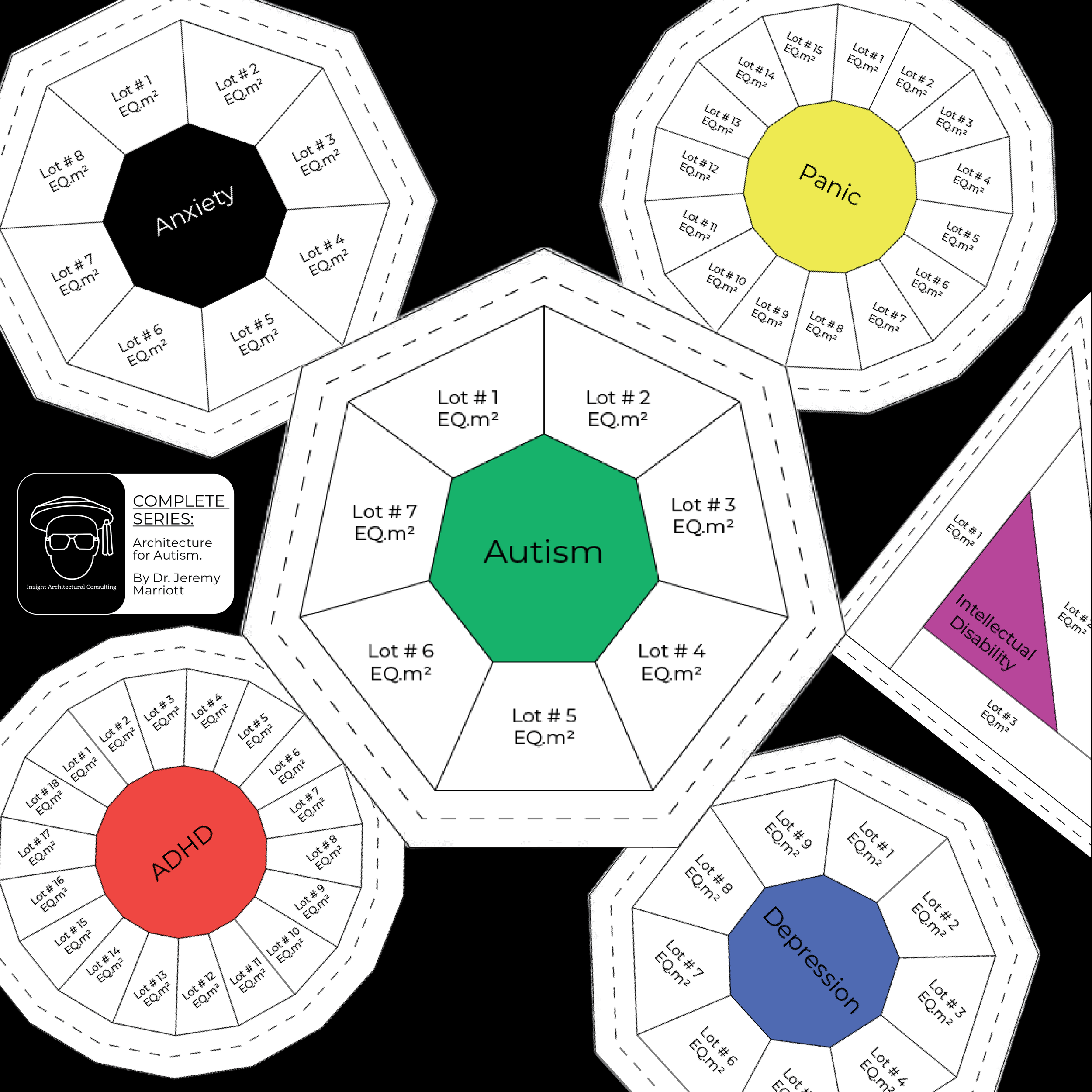
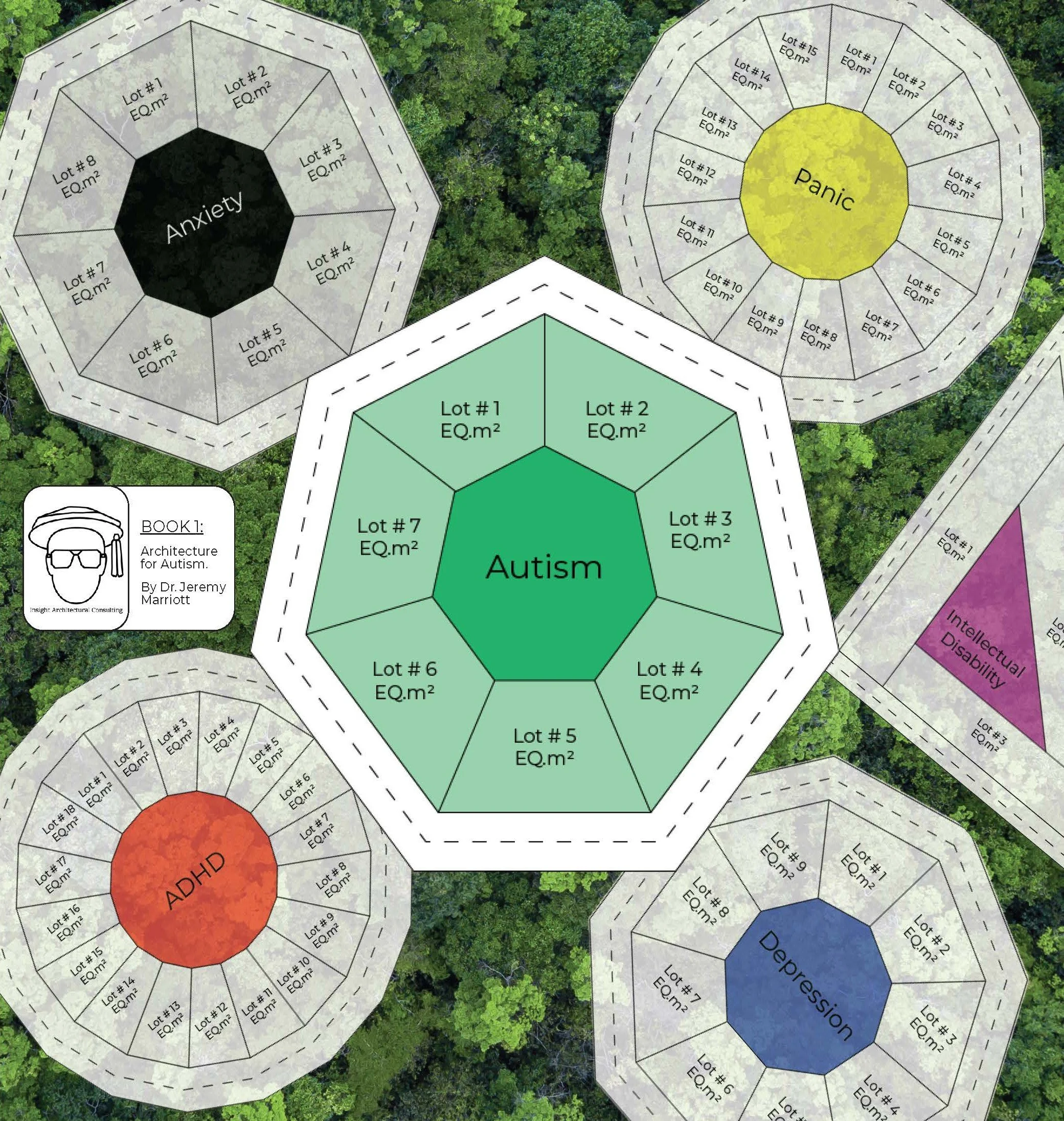
The 3rd (third) in a series of 4 (four) books, this architectural guide defined the attributes of Depression and Panic then provided specific design responses for the creation of highly-considered built environments as they relate to Autism. Using a novel method developed by the author, the diagnostic criteria for Autism from the DSM-5 TR (2022) were paraphrased and symbolically represented as land lots within an architectural plan geometry. Ultimately, as the ‘Architecture for ...’ book series unravels, the geometry created for Autism is considered alongside Anxiety, Attention Deficit/Hyperactivity Disorder, and Intellectual Disability to provide further design responses that cover the complexity and spectrum of Autism. The sum of the author’s work culminates in a unified back-page architectural site plan geometry worth consideration now and far into the future.
The 3rd (third) in a series of 4 (four) books, this architectural guide defined the attributes of Depression and Panic then provided specific design responses for the creation of highly-considered built environments as they relate to Autism. Using a novel method developed by the author, the diagnostic criteria for Autism from the DSM-5 TR (2022) were paraphrased and symbolically represented as land lots within an architectural plan geometry. Ultimately, as the ‘Architecture for ...’ book series unravels, the geometry created for Autism is considered alongside Anxiety, Attention Deficit/Hyperactivity Disorder, and Intellectual Disability to provide further design responses that cover the complexity and spectrum of Autism. The sum of the author’s work culminates in a unified back-page architectural site plan geometry worth consideration now and far into the future.